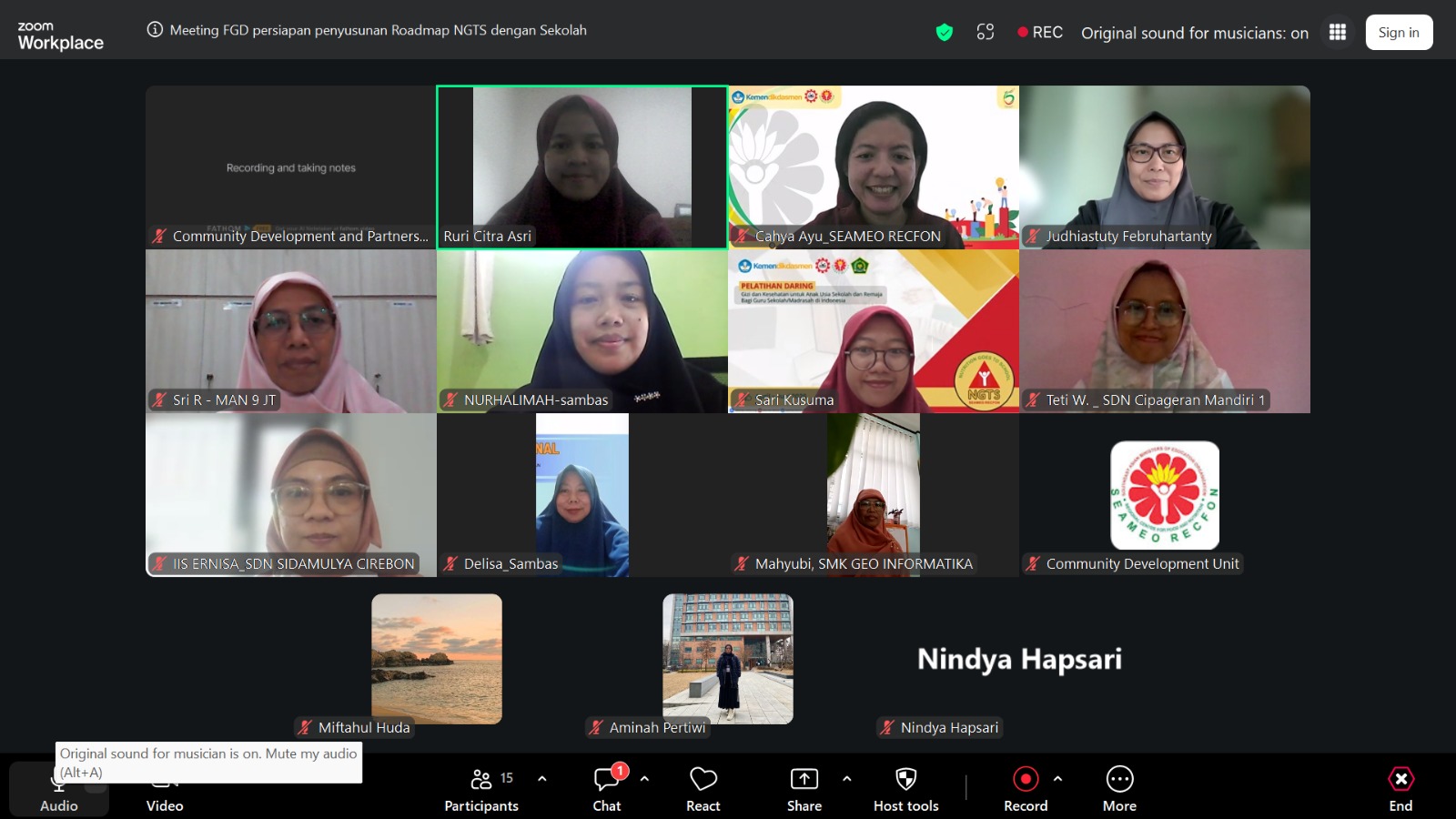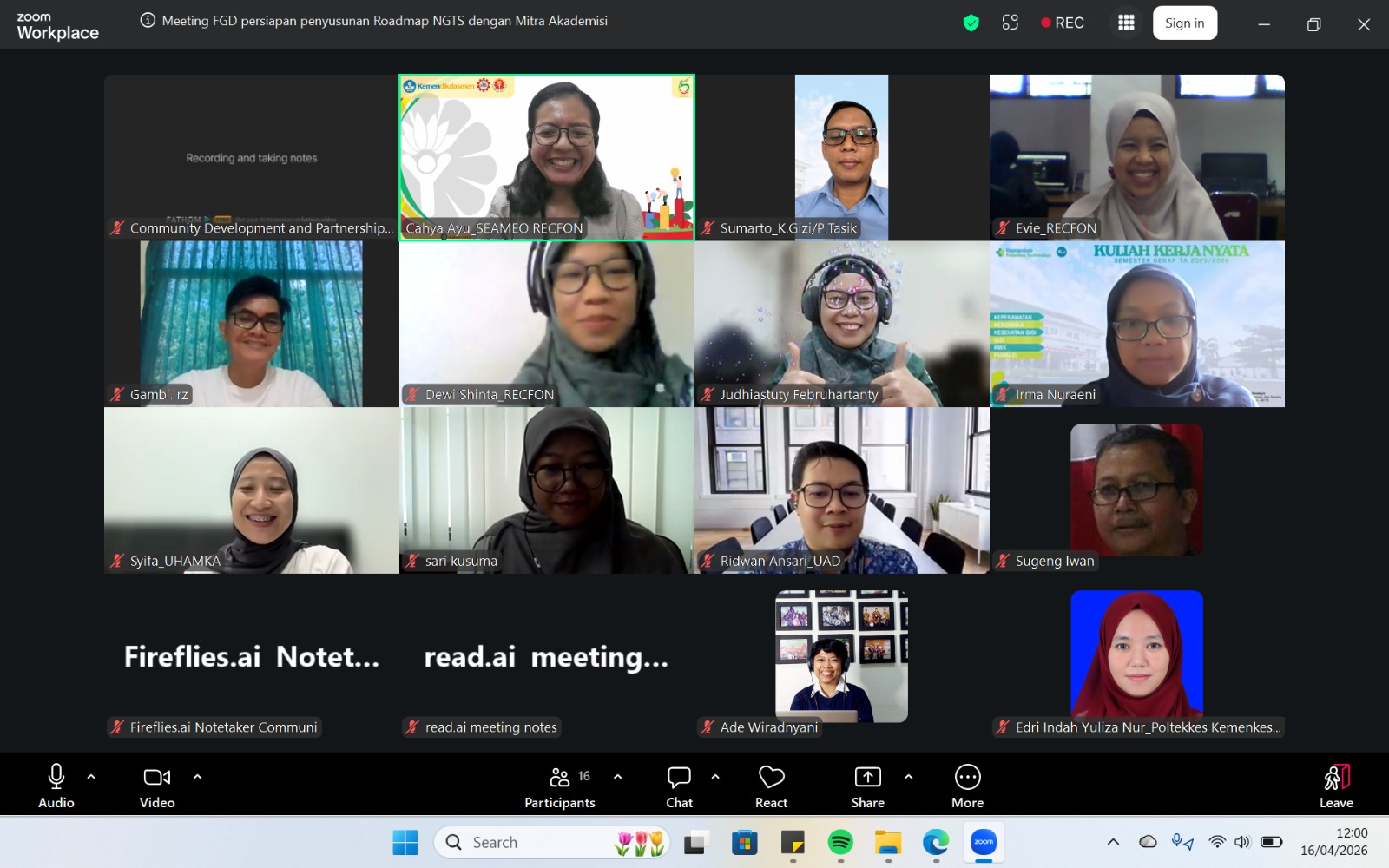
Jakarta, 16-17 April 2026
SEAMEO RECFON organized an open dialogue with academic partners as well as partner schools and madrasahs as part of the roadmap development process for the Nutrition Goes to School (NGTS) Program for the next five years. The activity was conducted online through Focus Group Discussions (FGDs) in two sessions, held on 16 April 2026 with academic partners and on 17 April 2026 with school representatives. The dialogue aimed to review the program’s collective achievements while gathering strategic input from partners to further refine the future direction of NGTS. This approach aligns with the 4th Five-Year Development Plan (FYDP) 2026–2030, which emphasizes strengthening evidence-based programs and responsiveness to field needs.
During the academic partners session, five supporting institutions from various NGTS Program locations actively participated in the discussion, including Universitas Muhammadiyah Prof. DR. HAMKA, Poltekkes Kemenkes Tasikmalaya, Poltekkes Kemenkes Malang, Poltekkes Kemenkes Pontianak, and Universitas Ahmad Dahlan. The discussion highlighted several key aspects of NGTS Program implementation that require further strengthening.
Strengthening the legal framework emerged as a key priority to support more optimal program implementation. In addition, clearly defined end goals were considered crucial to ensure a more measurable direction, particularly if NGTS is to be scaled up more broadly. In this regard, systematic and well-documented evidence of program achievements is essential to support an evidence-based approach.
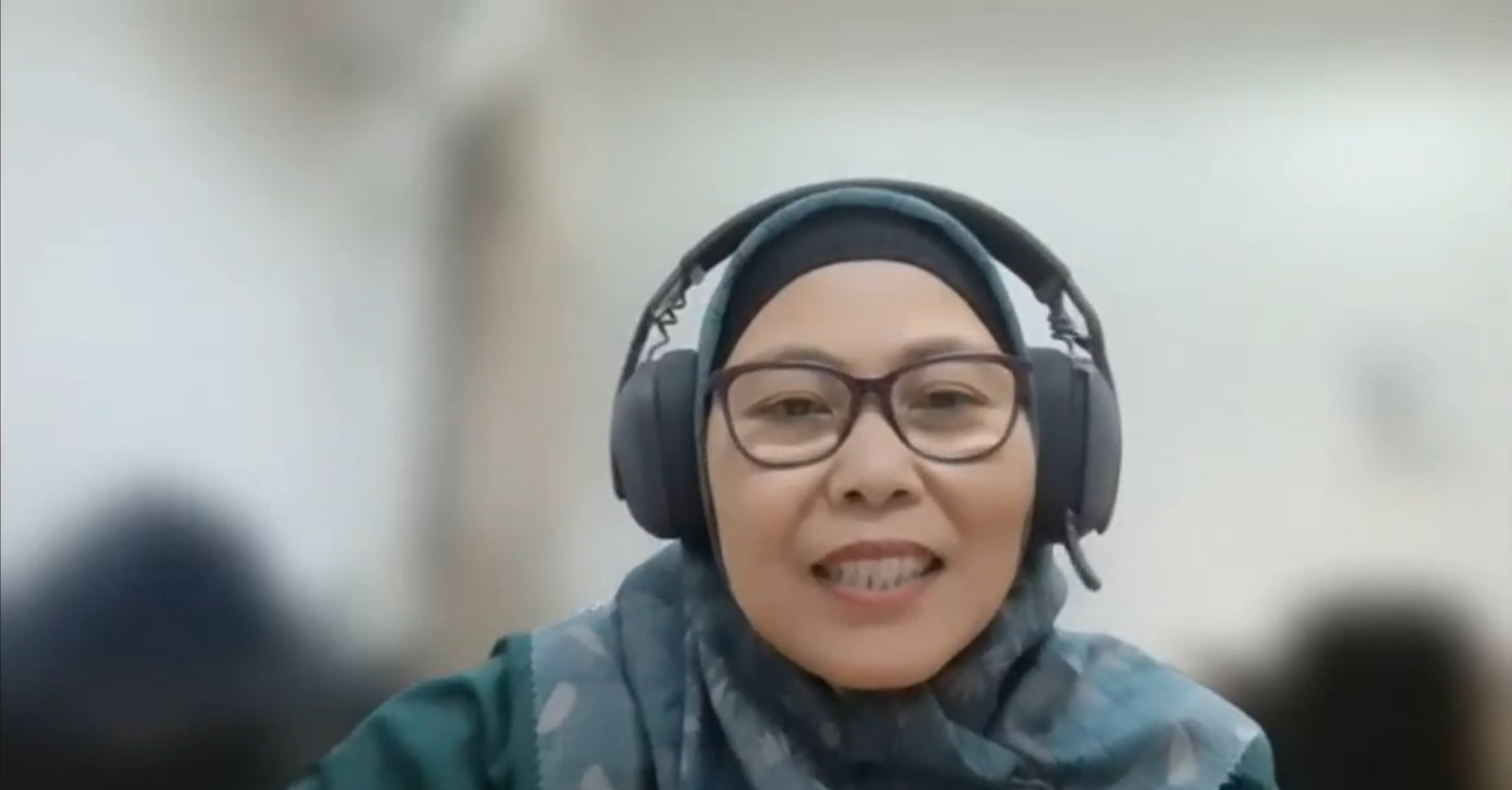
From an implementation perspective, simplifying the monitoring and evaluation system, including the development of more effective and user-friendly reporting mechanisms, was also highlighted as a key concern. Academic partners further emphasized the importance of fostering the independence of schools and madrasahs as implementers, so that NGTS is not merely carried out as an intervention but becomes sustainably integrated into school and madrasah practices and systems.
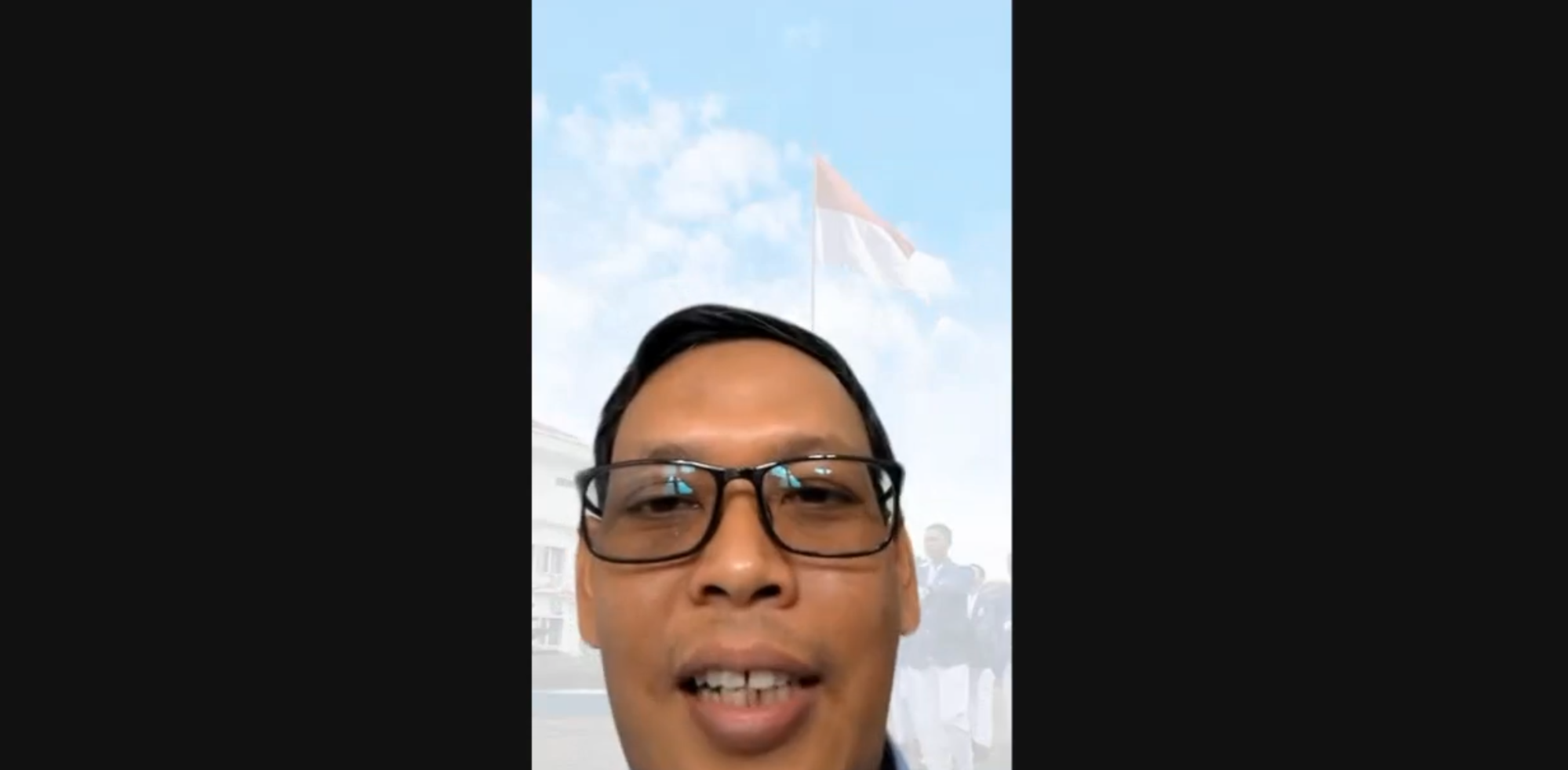
In the session with partner schools and madrasahs, eight representatives from various regions, including SDN Cipageran Mandiri 1 Cimahi, SDN Sidamulya Kota Cirebon, SMPN 7 Kota Cirebon, SMPN 8 Sambas, SMP Muhammadiyah 36 Jakarta, SMK Geo Informatika Bogor, MA Basiuni Imran Sambas, and MAN 9 Jakarta, shared their direct experiences in implementing the program. The discussion showed that NGTS has encouraged positive behavioral changes within school environments, particularly in increasing nutrition awareness, promoting the habit of bringing healthy meals, and reducing the consumption of packaged foods and beverages.
Several schools have also demonstrated initiatives to strengthen the program through contextual activities, such as “Nutritious Lunch Thursday,” which has evolved into a collective habit and supports the development of a healthier school environment.
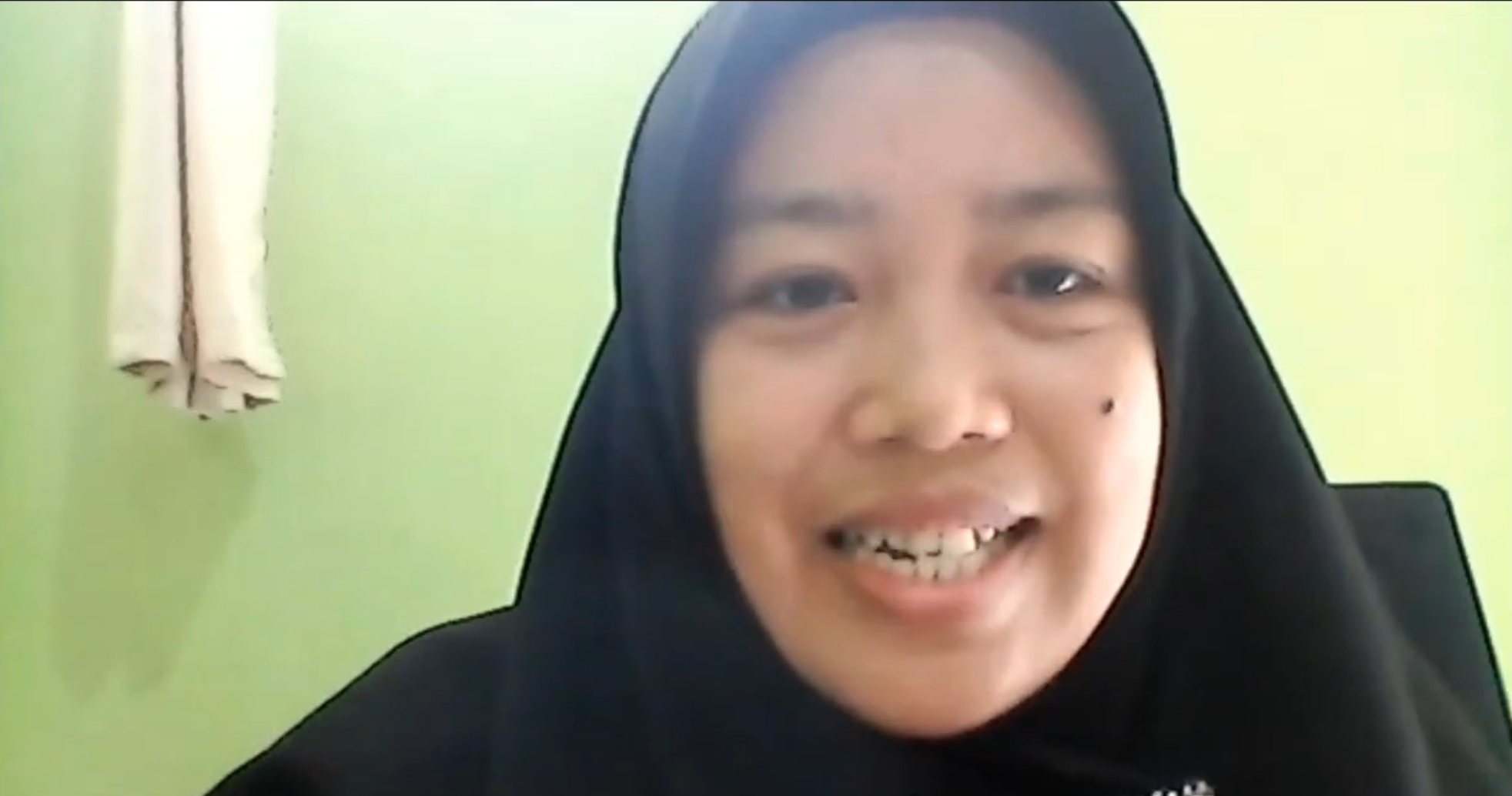

This series of dialogues generated targeted inputs as a foundation for developing the NGTS roadmap. SEAMEO RECFON will follow up on all inputs to ensure a more measurable, adaptive, and sustainable direction for program development.
Through this forum, SEAMEO RECFON reaffirmed its commitment to continuously strengthening collaboration with academic partners and educational institutions as part of a collective effort to sustainably improve the nutrition and health of students.