
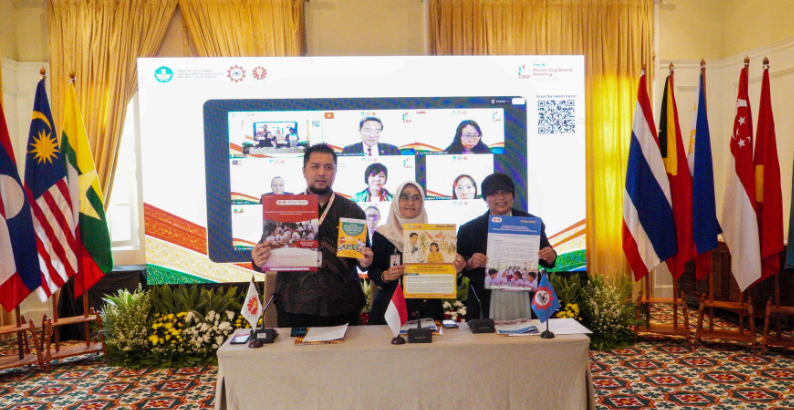
11 September 2026 — As part of the 16th Governing Board Meeting proceedings, SEAMEO RECFON hosted a dedicated Press Conference on September 9, 2026, at The Hermitage Hotel, Central Jakarta. Led by Director Prof. Dr. dr. Rini Sekartini, Sp.A(K), Deputy Director for Program Dr. dr. Brian Sri Prahastuti, M.P.H., and Deputy Director of Administration Dr. M Dzaky F Surapranata. The event marked the official launch of two strategic policy briefs and a comprehensive study report. The launch reinforces the Centre’s foundational mandate as a regional Center of Excellence in food and nutrition. “For SEAMEO RECFON, the launch of these policy briefs and study report is a concrete manifestation of our mandate in bridging science, policy, and practice,” stated Prof. Rini.
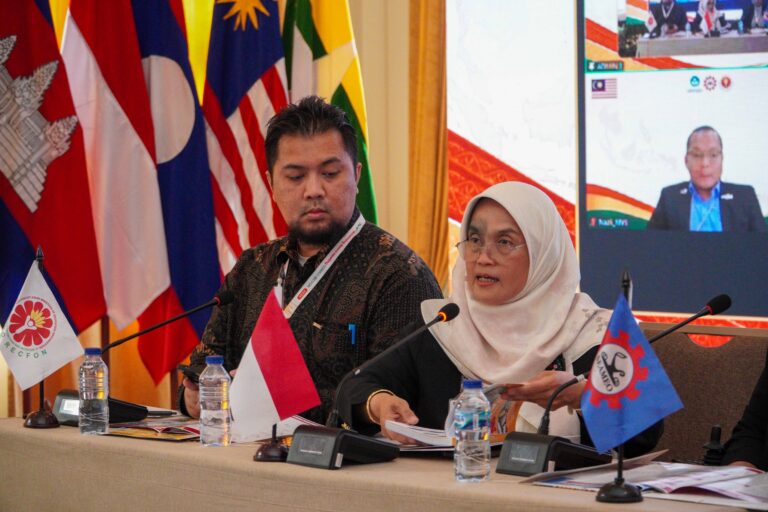
To fulfill this mandate, SEAMEO RECFON officially introduced three critical documents to media representatives and stakeholders. The first, a Policy Brief on Micronutrient Biomarkers in the 2026 Indonesia Nutrition Survey (SGI), advocates for strengthening domestic biomarker testing to support priority setting and the evaluation of stunting reduction policies. Emphasizing multiplex immunoassay methods, it outlines how to improve testing efficiency, lower costs, and maximize limited serum samples. During the media Q&A, Dr. Brian noted that measuring specific biomarkers like ferritin helps policymakers distinguish whether anemia stems from dietary deficiencies or infections like malaria, ensuring highly targeted national interventions.
The second document, a Policy Brief on the ASEAN School Nutrition Package, brings Indonesia’s “Nutrition Goes to School” experience to the regional stage. It stresses that school nutrition policies must extend beyond formal documents to include robust quality assurance and impact monitoring. “Through the policy brief on the ASEAN School Nutrition Package, RECFON brings Indonesia’s experience through the Nutrition Goes to School program to the regional level,” stated Prof. Rini. “We want to ensure that school nutrition policies do not stop at policy documents, but can be implemented well, have a quality assurance system, and their impacts monitored,” she added. The brief identifies strategic leverage points for implementation, specifically integrated interventions, healthy food environments, physical activity, and monitoring mechanisms, and calls for a common regional framework to strengthen national systems.
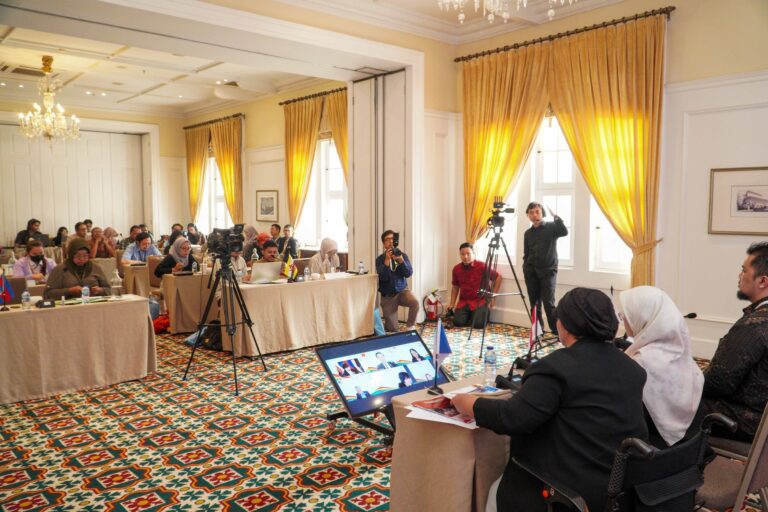
Furthermore, the Centre launched a Study Report on Local-Specific Food-Based Recommendations (FBRs). Utilizing WHO Optifood linear programming, this study analyzed the dietary patterns of 4,219 school-aged children across 12 representative provinces. It identified persistent gaps in folate, calcium, iron, vitamin A, vitamin C, and zinc, translating these findings into nutrient-dense, locally sourced menu recommendations designed to fill nutritional voids. These findings hold direct relevance for national initiatives like Indonesia’s upcoming Free Nutritious Meal (Makan Bergizi Gratis / MBG) program. “Our message is clear: MBG must become a strategic instrument to close the nutrient intake gaps among school-aged children while building healthy eating habits,” Prof. Rini emphasized. “Therefore, the MBG menu needs to be designed based on children’s nutritional needs and gaps, accompanied by integrated nutrition education so that children not only receive nutritious food but also understand, choose, and habituate a healthy dietary lifestyle from an early age,” she explained. Addressing media inquiries regarding the standard IDR 15,000 per-portion budget, the Centre clarified that prioritizing locally available options-such as ketupat sayur with local proteins or calcium-rich small fish with edible bones, keeps menus financially sustainable and culturally accepted.
Moving forward, SEAMEO RECFON will continue to solidify its role as a regional knowledge hub. “Moving forward, RECFON will continue to strengthen its role as a bridge between evidence, policy, and implementation, both for Indonesia and the Southeast Asian region, towards a healthier, smarter, and more competitive generation,” concluded Prof. Rini.