
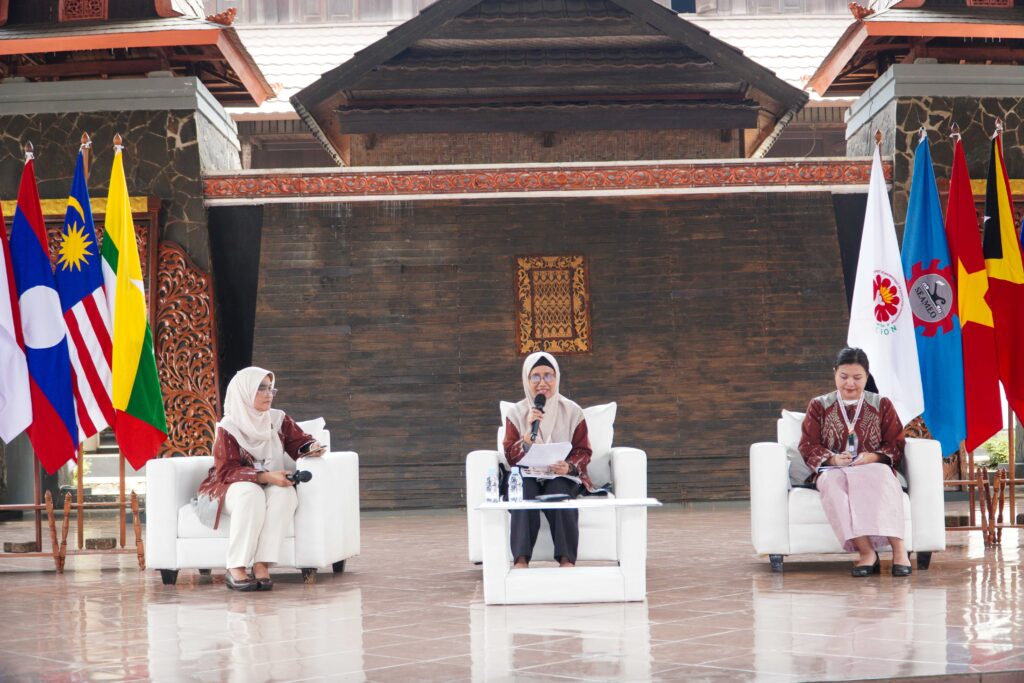
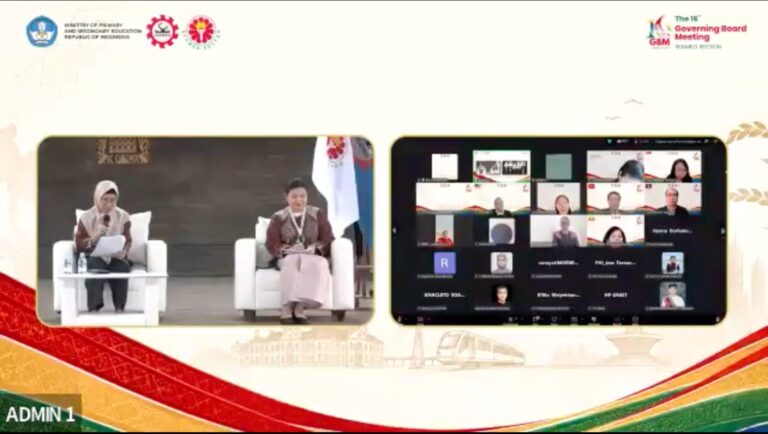
11 September 2026 — As a defining highlight of its 16th Governing Board Meeting (GBM), SEAMEO RECFON hosted a dedicated showcase session titled “From Preparedness to Resilience: The ECCNE NiE Model from East Lombok” on September 8, 2026. Held in a hybrid mode at the West Nusa Tenggara Pavilion within Taman Mini Indonesia Indah (TMII), the event unified regional leaders, local governments, and international experts to discuss community-based solutions for safeguarding the nutrition and health of young children during crises.
Moderated by SEAMEO RECFON’s ECCNE Coordinator, Dr. Umi Fahmida, the session detailed the evolution of the ECCNE NiE modelframework. Originating from the Centre’s response to the devastating 2018 Lombok earthquake, the model has evolved from short-term disaster relief into proactive, long-term community resilience and climate adaptation.
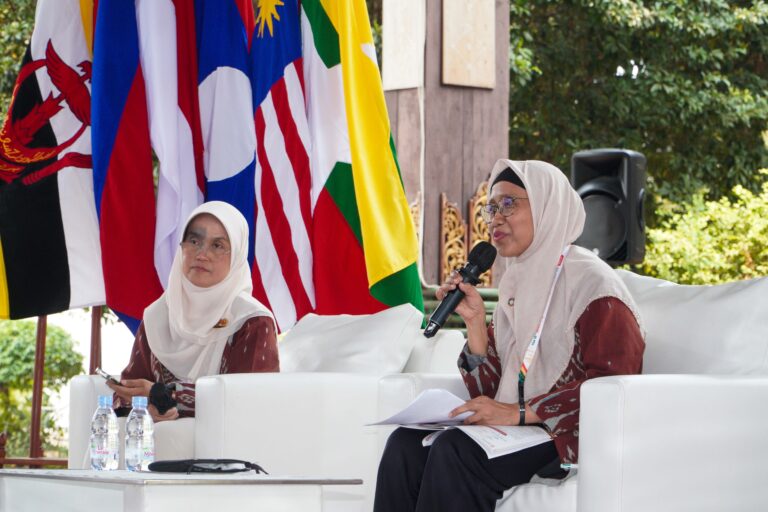
“In emergencies, children are the most vulnerable, and we carry the responsibility to protect them,” Dr. Umi stated during her presentation. “Our goal through ECCNE NiE is to build community preparedness and resilience so that communities are equipped long before a crisis occurs.” To achieve this, the model empowers families and community cadres, utilizing nutrient-dense, locally produced animal-source foods, such as fish floss and chicken liver floss, to support young children’s nutritional recovery.

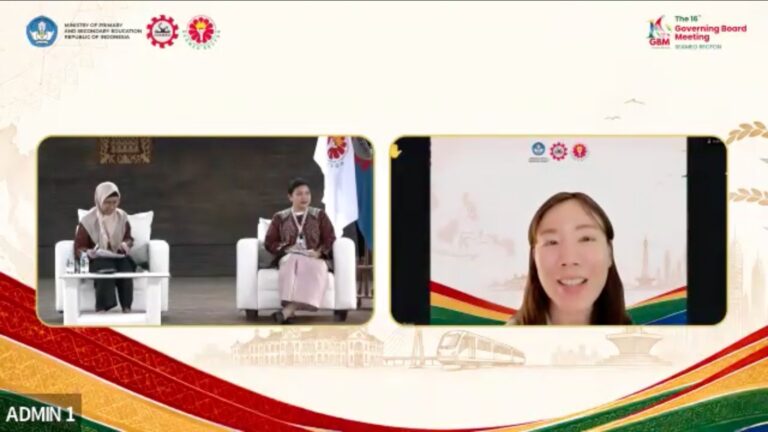
The showcase featured strong endorsements from local leadership. Joining virtually, the Regent of East Lombok, Haji Khairul Warisin, formally committed to institutionalizing the ECCNE approach into local government policy, linking East Lombok’s Disaster Resilient Village (Desa Tangguh Bencana) program with child health initiatives. “A resilient village is one that protects its most vulnerable citizens, especially young children, before, during, and after a disaster,” he emphasized.
The successful implementation in East Lombok sparked a robust regional dialogue among Southeast Asian delegates eager to translate the model into concrete regional action. Representatives from the Philippines and Thailand proposed integrating similar community-level resilience into their respective disaster risk reduction frameworks. Malaysia and Singapore highlighted the importance of adapting local food resources and leveraging food science for emergency food products, while Myanmar and Lao PDR discussed community-based delivery and digital monitoring in remote areas. Additionally, Dr. Pintip Lamnirath from the SEAMEO Secretariat recommended embedding a dedicated gender lens into future frameworks to protect vulnerable mothers and girls.
Closing the session, SEAMEO RECFON Director Prof. Dr. dr. Rini Sekartini, Sp.A(K), reaffirmed the Centre’s commitment to scaling these evidence-based solutions.
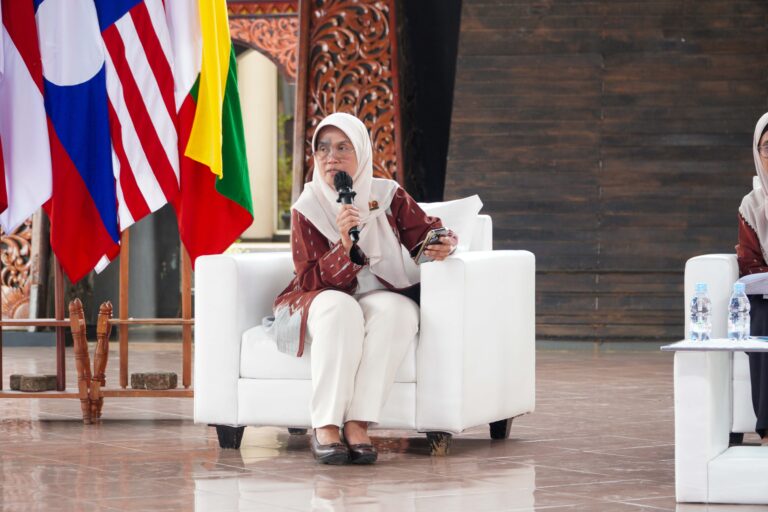
“From SEAMEO RECFON’s perspective, we see strong readiness to collaborate on adapting and scaling the ECCNE NiE model across Southeast Asia,” Prof. Rini concluded. “We welcome partnerships with governments, universities, and professional organizations to move from preparedness to true regional resilience.”
As SEAMEO RECFON embarks on its Flagship Programmes Roadmap for 2026–2031, the successful implementation in East Lombok serves as a vital blueprint for regional scale-up. The Centre remains steadfast in its core mission: to provide food and nutrition development options that ensure a better quality of life and a resilient future for all peoples of Southeast Asia.