
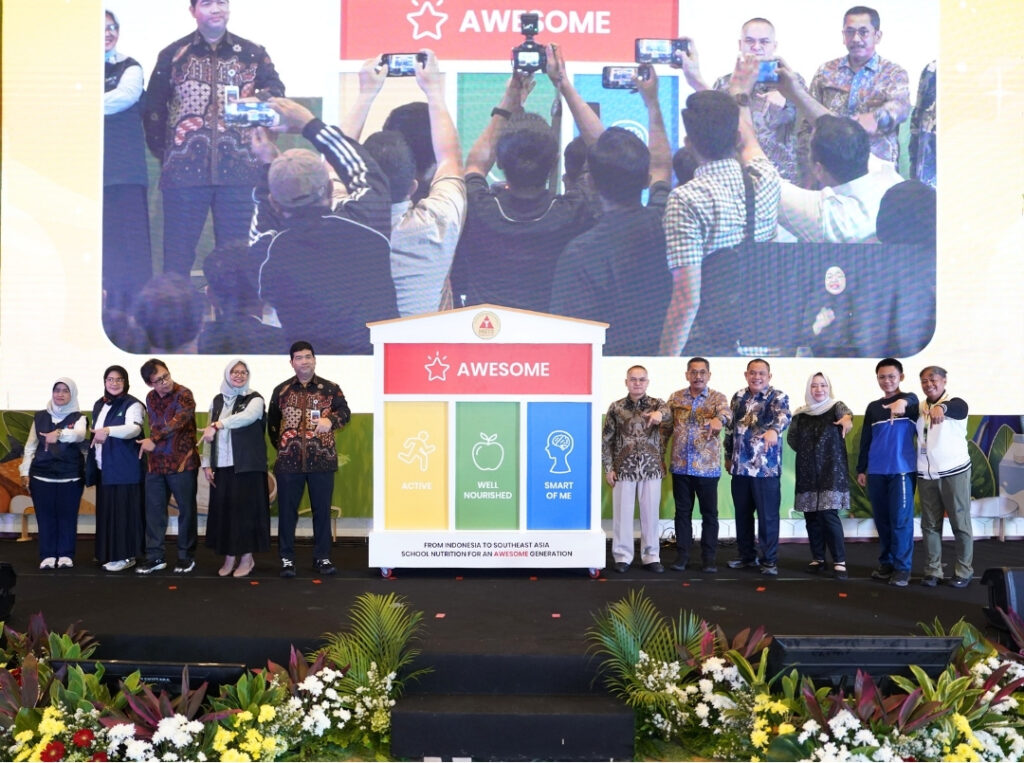
Jakarta, 23 August 2026 – A decade of SEAMEO RECFON’s Nutrition Goes to School (NGTS) programme came to a symbolic close—and a new chapter began—at Plaza Insan Berprestasi, Ministry of Primary and Secondary Education of the Republic of Indonesia. Held under the theme “One Decade of NGTS: Nurturing AWESOME Generations (Active, Well-nourished, and Smart of Me) from Indonesia to Southeast Asia,” the 10th Anniversary celebration brought together government officials, representatives from ministries and institutions, regional SEAMEO leaders, teachers, and students to commemorate a decade of collaboration in advancing school-based nutrition.
At the heart of the celebration was the symbolic construction of the “NGTS House,” representing the shared commitment of different sectors to creating a healthier and more supportive environment for children to grow, learn, and thrive.
The celebration opened with the national anthem Indonesia Raya and SEAMEO Colors, followed by a report on the programme’s 10-year journey delivered by Prof. Dr. dr. Rini Sekartini, Sp.A(K), Director of SEAMEO RECFON. Reflecting on the programme’s beginnings in 2016, Prof. Dr. dr. Rini Sekartini, Sp.A(K) emphasised that nutrition has always been viewed as a long-term investment in children’s development.
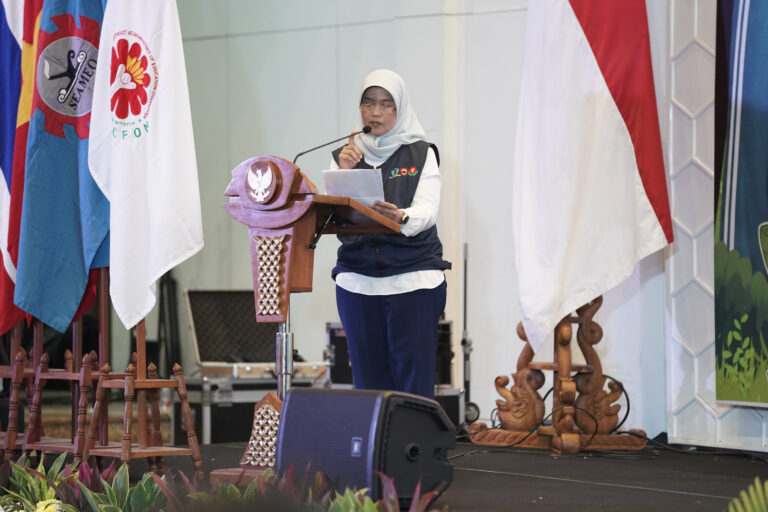
“We started with a simple belief: children cannot learn optimally when their health and nutritional needs are not adequately supported. As a paediatrician, I see nutrition not only as something needed today, but as a long-term investment for children to grow, develop, stay active, and ultimately become healthy and productive adults.”
Over the past decade, NGTS has trained more than 3,500 educators and supported 279 schools and madrasahs across Southeast Asia, while developing 41 Independent Schools across 11 districts and cities in Indonesia.
The Indonesian government also reaffirmed the importance of school nutrition as part of a broader education ecosystem. Dr. Tatang Muttaqin, Ph.D., Director General of Secondary and Special Education at the Ministry of Primary and Secondary Education, delivered a written speech on behalf of the Minister of Primary and Secondary Education, who was unable to attend due to another urgent engagement.
In his remarks, Dr. Tatang Muttaqin, Ph.D. highlighted the importance of using the lessons from NGTS’s first decade to strengthen future efforts. He also emphasised the relevance of school nutrition to the government’s current national priorities, including the Free Nutritious Meals (Makan Bergizi Gratis/MBG) programme.
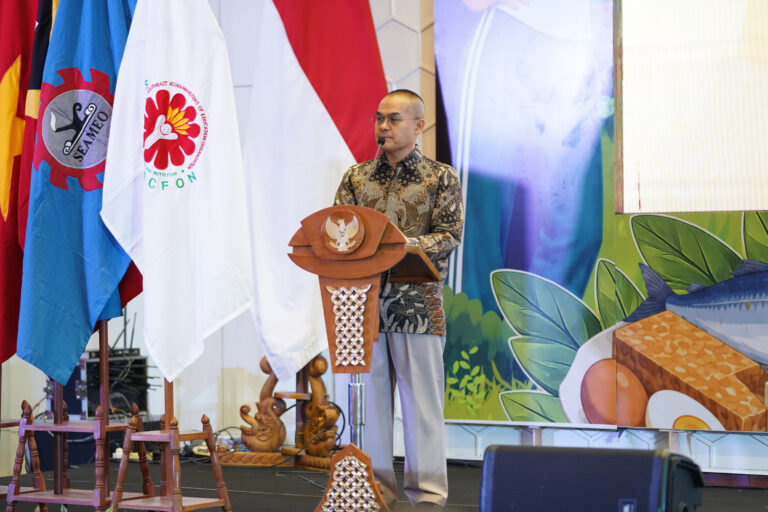
“Nutritious meals at school should not be viewed merely as the provision of food. They should be part of nutrition education and the development of sustainable healthy habits within the school ecosystem. This spirit is aligned with the Seven Habits of Great Indonesian Children movement.”
He also appreciated NGTS’s approach of allowing schools to identify their own challenges and priorities rather than applying a rigid, one-size-fits-all model. This approach, he noted, is aligned with the principles of participatory, transparent, and accountable school-based management. Once all the pillars and the roof were installed, the NGTS House stood completely on stage. The symbolic construction was followed by a joint commitment signing, with invited officials signing the house structure as a visible expression of their support for the continued development of school-based nutrition.
The moment was further joined by Dr. Temu Ismail,, Secretary of the Directorate General of Teachers and Education Personnel at the Ministry of Primary and Secondary Education; Dr. Maulani Mega Hapsari, SIP., MA, Director of Junior Secondary Schools at the Ministry of Primary and Secondary Education; and Sugito, choreographer of the Senam Anak Indonesia Hebat, who took part in a commemorative group photograph with the key figures supporting the celebration.
More than a ceremonial installation, the NGTS House represented a decade of collective work and a commitment to continue strengthening nutrition education through schools. As SEAMEO RECFON celebrates ten years of NGTS, the house also serves as a reminder that nurturing healthier generations cannot be achieved by one institution alone. It requires collaboration among schools, families, communities, government institutions, and regional partners. With the first decade now complete, the foundation has been laid for the next chapter—continuing to empower schools and madrasahs across Indonesia and Southeast Asia to nurture generations that are Active, Well-nourished, and Smart of Me: the AWESOME generation.